Showing posts with label The Araminta. Show all posts

Friday, February 3, 2012

Betty by the Numbers: Pretty on the Inside


Betty by the Numbers:  Pretty on the Inside


Blondes have more fun, according to Cynthia Heimel, because you can find them in the dark.  Perhaps that’s why Betty Neels shied away from them, the gilded hussies*.

  Elizabeth Gunning, an 18th-century Anglo-Irish beauty

She was not shy, however, about stamping her poor brunette darlings with some pretty cruel assessments of their physical appearances.  Take, as a for instance, this description of a 24-year-old with all the advantages a country upbringing provides a woman’s complexion:  “a slim figure with long legs, her titian hair... pleasant face... her astonishing violet eyes.. small, high-bridged nose and wide mouth.”  This is Beth Partridge, on whom A Star Looks Down (1975), and Betty assures us that Beth is plain.  She assures us, in fact, over and over, bluntly and inarguably – that this slim, long-legged, glowing redhead with purple eyes is barely worth a second glance, and unlikely ever to attract a husband.  Beth mentions it several times, her brother agrees, her RDD seems to agree as well...  WHAAAAT?!?  (At least she’s pretty when she smiles.)


Truly violet eyes allegedly only occur in albinos, but deep blue eyes like Elizabeth Taylor’s sometimes appear to be violet. 


Two theories:  first, perhaps Betty had the kind of parents, common in England in her era, who believe in depressing any pretensions their children might have toward self-worth.  There’s a wonderful story of the Mitford sisters’ nanny telling one of her charges, amongst the most beautiful debutantes of her generation, about to marry one of the wealthiest men in England in the society wedding of the decade, and concerned that her veil wasn’t falling right, “It’s not as if anyone’s going to be looking at you.”  The sisters had grown up with that catchphrase, designed to ensure they didn’t think too highly of themselves.  (It failed utterly; whatever self-esteem issues the Mitford sisters had, they certainly seem to have believed entirely in their divine right to say, do and have whatever they wanted.)

Second theory:  Betty believed in Vogue magazine, with its prejudice toward the wand-like (I once read a male fashion designer complaining that breasts ruin the line of good clothes), rather than in Esquire, movies and popular music.  Surely no one ever accused Marilyn Monroe, Elizabeth Taylor or Diana Ross of string bean-liness, but they pretty consistently beat out Jean Shrimpton and Twiggy in the popular polling for the 20th-century’s most beautiful women.

 
Vogue favorite Twiggy was 5’6” (1.68 meters) and weighed eight stone (112 lbs;50.8 kg) in the 60s; her bust-waist-hip measurements were 31-23-32 inches, or 79-58-81 cm.


Popular movie star Ann Margaret was
allegedly a rather splendid 35-23-35, or 89-58-89 on a 5’3” (1.6m) frame.  If I may say so, madam has a lovely bosom.


Science tells us (today at least; science may figure out something new next week) that men are most attracted to women whose looks suggest good child-bearing potential.  Thus, an 80% or lower ratio of waist- to hip-size and youthful features like full lips, big eyes, lots of hair and unlined skin count as attractive.  So from the hot-or-not perspective, standards of female beauty don’t change much.  Fashion, historically, disagrees, telling us all sorts of stuff, like this fall, broad shoulders and perfect calves are key, and next spring will be all about narrow shoulders and delicate wrists.  Short, curly hair this year, long, layered hair next year; models are clamoring for russet shades as the trend for blondes fades, okay, okay, okay.  (My favorites are the makeover pieces in fashion magazines that tell you that no matter what shape your face or body is, no matter what your skin tone or hair color, there’s a way to fix it!)

Lillie Langtry, late-19th century Jersey (UK) girl and celebrated beauty

 Anyway, we know for sure that the models in the Sports Illustrated swimsuit edition are a lot more consistent in looks than the models in Vogue’s fall fashion preview over the years.  Why does this matter?  In part because our heroines can stop worrying about being size 14s, which in England in the 70s was the equivalent of about 34-26-36, according to the best info I can find on the interweb.  Anna Wintour and Tom Ford may not like those measurements, but pretty much everybody else in the whole world does.  So small or big, plump or nicely curved, beautiful, ordinary, plain but lovely when she smiles, or dishy, our heroines are good looking women.

The good looks vary a bit, but return to some consistent themes – dark hair and curves especially.  Betty specified hair color for 127 of her 135 heroines, and of those, just nine had yellow hair – that’s a lonely but lovely 7%.  They were honey, gold, corn and sandy, by the way, and all were characterized as pretty or beautiful, except sandy-haired Deborah Farley, whose face was a mere ordinary in Year’s Happy Ending (1984).  One blonde shows up every other year from 1970 until 1988, but for the last 13 years of her writing career, Mrs. Neels eschewed them entirely.  When they do appear, they bear blue (five), green (three) or hazel (one) eyes.


Blue-eyes, hair the color of ripe corn (English word for wheat), already scraped back into a bun for the easier perching of a nurse’s cap.


Blonde is not the least common color, though.  While there’s lots of “dark hair” in Neelsland, only Julia Pennyfeather (The Fifth Day of Christmas, 1971) had specifically black hair.  Setting aside the becoming silvers and whites more appropriate to ideal mothers-in-law than romantic leads, black is the least common hair color in the oeuvre.  Julia has brown eyes, in case you wondered; she is also beautiful.

Mostly we follow the trials and dinner-dates of brown-heads in all their variety:  pale brown, dark brown, light brown, mouse, honey brown, deep brown, warm brown, soft brown, nut brown, light brown, rich brown, plain-old brown, that “dark hair” and tawny.  A full 71% of nurse/companion-types have brown hair; 23 of those 90 women have mouse-colored hair.  I’m not sure what the difference is between pale brown and mouse (except that L’Oreal does not offer a hair-coloring product in mouse), but I do know that not a single one of those mouse-haired young women is described as pretty or beautiful.  Eighteen of them win a description as “plain” or “ordinary” – that’s 78%.  Ouch!  Of the 25 future Mrs. Doctors with pale brown hair, just three are pretty, while 14, or 56%, are plain or ordinary.  The pale-browns and mouses have the highest percentage (seven, or 15%) of the back-handed compliment “good looking but not pretty.” (What?!?  How are “good looking” and “pretty” not synonyms?)


Is this the most famous mousey-brown hair in the world?


Heroines with dark brown or simply dark hair count 24 in total, and 22 of them are pretty or beautiful.  All of the three tawny-haired ladies are pretty or beautiful.  In light of this evidence, I’m going to start thinking of my own hair color as tawny, rather than mud-brown.

According to computer, the English run about 10% redheads, so Betty’s choice to make 21% of her hair-identified heroines redheads suggests an affection for the breed.  (Incidentally, far from disdaining the coppertops as shown in Sister Peters in Amsterdam (1969), where Adelaide attracts numerous un-admiring looks and comments from Amsterdammers for her red hair, today the Dutch celebrate an international redhead day each year in Breda.  Meanwhile, in the UK Mick Hucknall and others are claiming intolerance toward redheads is widespread.)  Further proof of her preference:  Betty tells us 74% of her 27 red, ginger, copper, pale copper, russet, titian, carroty, chestnut and bronze-haired heroines are pretty or beautiful; only 15% are plain or ordinary.  Perhaps because they have lovely eyes; 30% of them pair green eyes with their chestnut locks.  Second most common is grey, with 22%, then there are three each (11%) of blue, brown and hazel, plus one tiger and Beth with her astonishing violet.
 

Redheads in many shapes, shades and sizes – all beautiful, surely!


 The Venerable Betty specifies eye color for 117 of her heroines, or 87%, sometimes as vaguely as “dark,” other times as specifically as that “tiger.”  If we’re willing to include tiger-eyed Victoria Parsons (Victory for Victoria, 1972) and tawny-eyed Euphemia Blackstock (An Apple from Eve, 1981) amongst our brown-eyed heroines, then those are the most popular irises, with 26 heroines, 19%, sporting the shade.  If we chuck in “dark” eyes as well, the figure jumps to 40, or 30%.  Grey and hazel eyes tie for second place, with 24, or 18%, each.  There are 15 green-eyed girls, 12 blue-eyed babes (including one cornflower and two sapphires), and then lard-thrower Mary Jane Seymour (Dearest Mary Jane, 1994) and rock-climber Beth Partridge each claim violet eyes.  Mary Jane has light brown hair and an “unremarkable” face.  Again, whaaat?  How do you get an unremarkable face if it has purple eyes in the middle of it?


“Sometimes I’m overcome thinkin’ about it... you, my brown-eyed girl”


So what about beauty?  Sixteen of Betty’s ladies earn the descriptor “beautiful;” that’s 12%, and clearly a very high standard.  I think I class well over 50% of the women I know as beautiful.  In Neelsdom, they’re probably pretty at best:  46, or 34%, of her heroines are, while 26, 19%, are ordinary and 19, 14%, are plain.  (I think I counted those with “no looks to speak of” in the “ordinary” column, but some may have landed in “plain.”)  Doubtless the 13 (10%) described as ‘good looking but not pretty’ or some variation on the phrase are thrilled with the kind compliment, while the four, 3%, who get a back-handed ‘lovely when she smiles’ warrant another look – that smile is masking seething thoughts of vengeance.

Lady Diana Cooper, early-20th c. acclaimed beauty


Maggy MacFergus, a Nurse in Holland (1969) is the first of 45 tall heroines – at six feet in her stocking feet, she definitely qualifies.  A total of one-third of the women are tall, and of those, 87% are also described as pretty or beautiful.  Only Cassandra by Chance (1973) gets to be tall and not beautiful; instead she’s a jolie laide with an ordinary face, pale brown hair and hazel eyes.  Good thing Benedict is blind when she meets him, and so gets to know her beautiful character before less than dazzled by her unremarkable exterior.  In 1982, Betty starts to mix things up a bit by introducing the term “big” to mean both tall and splendidly built.  There are seven big girls; adding them to the talls, we have 39% big/tall heroines.  The women described as big are all also termed beautiful, pretty or charming.

So we turn to the small women, all 41 of them (31%), and another clear prejudice of our author:  71% of small heroines are plain, ordinary or ‘good looking but not pretty.’  Just 12% are pretty, and none are beautiful.  Women of medium height fare slightly better; two of the 11 (8%) are beautiful, and one is pretty; eight are plain, ordinary or good looking but not you-know-what.

How long were you reading Betty before you figured out that you weren’t re-reading the same book (‘This seems awfully familiar...’)?  Oops, I meant to ask, how long you were reading Betty before you figured out that ‘plump’ doesn’t mean, ‘just this side of fat’?  For those of you newer to the ouevre, I think it is very helpful to know that ‘plump’ means... hmm... how to put this... munificently endowed in the over-carriage?  Full-figured?  Stacked?  I hope this may save you some confusion when you read that Serena Louisa, one of the 25 “plump” ones, has a tiny waist and great legs with slender ankles.

Not what Betty means by “plump”

Plump is the second-most common figure-size classification.  The most common?  A “splendid figure,” or splendid proportions, or splendidly built.  This applies to 32 of our heroines, or just under one-quarter of the 135 of them.  “Plump” covers 19%, while 14% are “nicely rounded” or some variation thereon.  “Thin,” which consistently pairs with “no looks to speak of” and its equivalents, describes 11%, while nine, or 7% are  “slim,” which more often couples with “lovely” or “pretty.”  “Charming figures” show up on ten heroines, also 7%, while just three, a mere 2%, are “nicely rounded.”

Now, you must take all of this with a grain of nutmeg (grated over Brussels sprouts), since I just jotted down the earliest descriptions of most of our heroines.  It is entirely possible that someone I’ve shorthanded as “small, plump, dark/hazel” subsequently earns praise for her charming figure and rich brown hair.  And I’m afraid I couldn’t bear to delineate every “delightful smile," "slim waist” or “nose that was almost snub.”  I believe, though, that regardless of exact counts of dimensions, shades and evolving levels of loveliness, we can agree that Betty Neels had some truly cockamamie ideas of what constitutes pulchritude in the female.

 Native Londoner Samantha Fox, late-20th century pin-up and pop-music hitmaker

* Joke!  Two of my dearest friends are currently passing as blondes.  My biggest crush in college was on a blond (with pale blue eyes and a beaky nose; only about 5’9”, though).  I was blonde myself as a child, then dirty blonde in my teens, and brunette by adulthood, and oh how I mourned the change.  I love yellow hair.  It is so pretty and shiny.

Thursday, September 29, 2011

This Is War.

Drop. The. Puck. Ref.
I don't know as we've ever formalized the terms of the battle.  Yes, there have been 'sorties and surprises', ambushes, minor skirmishes, strafings and sniper attacks.  But a head-on fight, such as that of a fully operational Death Star versus a small but plucky band of determined Rebels?  No.

And though we amiable Bettys rub along well enough--like a band of Pilgrims and Indians enjoying a Thanksgiving feast--we know it's there.  Under the surface.  The knowledge that tomahawks and flint locks are not far at hand should the final reckoning come.
Mistress Goode Mindwell handed over the bread with a winning smile but couldn't help herself.  'Olivia' she growled.  Chief  Six Feathers of the Wampanoag thought 'That's torn it' and threw down his tomahawk with a cry of 'Araminta!'  Next year, Thanksgiving was going to be awk. ward.
I know we all have them.  Our favorite books, our favorite themes, our favorite characters...And it's time to roll your sleeves up and show your ill-advised Betty tats.

Which team are you?  Araminta or Olivia?

Monday, June 20, 2011

The Bachelor's Wedding - Reprise

There is a ton of stuff I love about The Bachelor's Wedding.  I do love a plucky heroine, and Araminta fits the bill.  I adore how she deals with the recalcitrant teenagers. Here are a couple of clips from my discussion thread:
  •  Dread Pirate Alice...or Alice the Supposedly Anaemic. On the strength of some doctor a couple of years before informing Alice the Gigantic Pill that she needed to lead a quiet life, she made a career of it. No energy for cooking, cleaning or grocery shopping, but plenty for buying trashy clothes and going out with her friends. [Betty Keira] I love the idea of her marrying a fat American millionaire who showers her with lurex gowns and gaudy jewelery. [Betty Debbie] I can't see her marrying an American Millionaire. Alice is pure trailer trash. She's more the type to get knocked up and live on the dole, spending her days watching the telly and getting fat. Since the doctor's 2 year old recommendation, she hasn't been back. I'm in love with Jason for shooting her down at their first meeting. "I'm sure you must be relieved to know that...whatever it was your doctor diagnosed has apparently cured itself..." Jason must not believe that there's anything to DNA...
  • Mrs. Pretty. Best use of occasional household help in a Neels novel. "...a lady whose appearance had nothing to do with her name; she was a big bony woman, nudging sixty, with a craggy face and a disconcerting squint. She had a powerful voice, smoked like a chimney, and had an elaborate hair-do which was tinted an unsuitable chestnut with highlights." She was a treasure. I especially like that she calls Araminta "my lovely". No one had ever called her that before. How did they stand the smoke smell in their house?
Enjoy!


Nothing like this ever happens in the book.

The Bachelor's Wedding was a well-liked novel in my library but with this reading, and the attention to structure and character and the copious notes taken, I began to see more. Let's go, then:

Characters:
Surgeon Jason Lister lives in a Regency house in London, has a cottage in north Essex, two married sisters (who we get to know and everything), two golden Labs (Goldie and Neptune), spectacles (he must be half-blind when he reads because he wears them a lot), a dark gray Rolls Royce and reads Homer, Juvenal and Horace in the original...of course. I do not know his age but I guess mid-thirties.
Araminta Smith (yes Araminta of The Araminta fame) is twenty-three and, by his description, "Plain...nicely plump, large dark eyes, and a very direct manner." She is also saddled with the two most useless relations in all Neeldom. Alice (as in Mao, Stalin, Hitler and Alice) and her father who goes around in the background muttering things like, "I gave Alice the housekeeping to buy a faux-leather coat. You're hard, Araminta" and other similar guilt-inducing lines.

Plot:
Jason's sister's husband is sick in Chile (somewhere with something--we never know what) and she needs him to get a temporary nanny so that the 13-year-old Gloria and the 15-year-old Jimmy can come stay with him and his two trusted but old retainers. Hmmm...Two kids would upset a house that much? I would have said no, Araminta. Still, she's dispatched to Tisbury to collect the horrors, pour tea down everyone's throats and bring them to London.

They stay in London. The children don't do anything like light her braids on fire but that is probably only because they couldn't find the matches and she wears a bun. They are rude, disagreeable and constantly begin arguments about not picking up their clothes or unpacking or raising a finger by starting each sentence with, "Patty doesn't..." or "Patty always does it..." (Patty is their nursery-maid cum slave who is away with a dying mother.)
She also takes the children back to Tisbury after the week for another week or two. Jason sees her occasionally and reads the kids the riot act for treating Araminta like a servant (which she is, in a way, so I don't get why it's so outlandish that she should eat in the kitchen with the staff). He thinks to himself that it might be nice, having a wife like Araminta, being a buffer and a friend.
When she returns to London she gets to hear that her father and sister have been running up bills (never with a credit card...always just a tab...in London...in 1995). She gets a part-time job ("I hope you're strong.") tending a cranky geriatric woman whose only occupation in life is spoiling sheets and berating the help. But it's okay because Jason's shown up and whisks her off to lunch where he proposes, beginning with a line most calculated to have the butter dish upended over his head, "I have decided to take a wife...so I must settle for second-best." He then makes her quit her job which should offend my feminist sensibilities but never does.
Bloody Alice and Finkish Father react with typical selflessness and the upshot is that Araminta walks down the aisle on her father's arm (who was probably bribed to be there--her sister, receiving no incentive, fails to show up) in a new suit bought from proceeds that Jason secretly channeled through her father. And, as in the old game Telephone, funds were lost in the transfer. That's right. Jason is the U.N., Araminta is a starving Serb and her father is a Balkan warlord.
She takes up tapestry work (you know what that means), goes through the linen closets (always the first order of business for a newly-wedded bride) and spends no time wondering why none of his family was invited to the wedding--and neither should you. It's not important.

And then they go shopping. Bless our Neels heroes for their stubborn adherence to the maxim that if some clothes are good, more clothes are better. But then he ruins it by failing to be properly bowled over by a nut brown crepe-de-Chine with a wide Quaker collar and cuffs in cream silk.
To illustrate: A hot Quaker...well, Puritan.
Hmmm. I too fail to understand why he would fail to be bowled over. Anyway, his inattention brings her attention to the fact that she would like his attention. To Harrods!
Some lipstick and powder applied with liberality and a soft rose-colored lamp finish the job. His eye is caught. Alice the Red and Finky Father have to be dispatched--which they are--to Bournemouth (a mere 86 miles away--which isn't as far as it needs to be) and their house is sold. Of course Jason did it. So, follow me here. The price for Araminta's happiness stands somewhere in the vicinity of a hundred thousand pounds. Have I mentioned I love Jason?
A storm comes, a nephew is saved, his leg is set (ew.) and a lot of Burberry is tossed about.


Enjoyable kissing!
The end.

Wrap Up:
Until the wedding (on page 144) this is Jason's book. His progression from uninterested employer to unwilling friend to convenient fiancee is plotted along an unbroken line. There are no great leaps in logic and, I suppose, if one were planning a marriage of convenience this would be the way it came about. I take issue with his last name, however. Lister. Fine enough on its own merits but her name is Araminta and those young relations of his are one freak brainwave away from calling her Auntie Listermint.

Araminta consults a vicar when she wants to know if she should marry Jason. Actual religious duties of this nature are not unheard of but on the rare side for Neeldom.

Gloria and Jerry go to their rooms and play loud music on their "record players" in 1995. In that year it might have been Coolio's Gangsta's Paradise. Just saying.

Most un-Betty line: "I must stop drooling."

Rating:
Queen of Puddings. There are some seriously charming bits and the best line ever delivered to an awful child:
"We always do what we want," declared Gloria.
"So do I."
The couple are likable from beginning to end and if Dread Pirate Alice and the Fink are a mite two-dimensional, I humbly submit that 220 pages is on the short side for nuance.
Araminta plots her attack on the heart of her husband with a touching faith in the power of Harrods but is borne out in the end so there must be something to it.

Thursday, January 6, 2011

Roses Have Thorns - 1990

Oh what fun. A spunky Araminta and a RDD who has been thrown over for a South American millionaire! Get comfy, I'm pretty sure this is going to be a long one...

Sarah Fletcher, orphan. Age 28. Clerical worker in Outpatients at St. Cyprian's. Lives in a bedsit with Charles - her cat. She has known Professor Nauta for two or three years - he has an Outpatient clinic once a week. Sarah considers him impatient and ill-tempered and figures that he never really notices her. The Professor does notice her...but not romantically. He considers her a sensible young, but not too young, woman who dresses appropriately for her job. Things might have gone on like this for years...possibly decades, if a strange woman hadn't stopped by one evening. The Prof. has asked not to be disturbed, but this woman is insistent. Sarah calls the doctor to let him know a woman is here to see him. The Professor responds with some language that is rather stronger than Sarah likes. You should watch your language...she says to him - oh dear, such strong language on her part could get her sacked. Not to worry, the insistent lady is his own mother and she has taken a liking to Sarah, which, as any Neels aficionado knows, is the Future Mother-in-Law Stamp of Approval, No Substitutions Accepted. For her part, Sarah can't imagine anyone wanting to marry the Professor. While having a fine manner with his patients, he is impatient and irritable around pretty much everyone else. Well, he would be, wouldn't he...having been thrown over for a South American millionaire, years before. That's bound to make a man irritable.
Mummy would like the Professor to arrange for Sarah to come to Holland and be a companion to the Professor's granny. Mummy's had one of her 'feelings'.
Much to Sarah's surprise, Professor Nauta (which sounds sooo close to 'naughty') invites her to lunch. After first discovering the state of Sarah's vacation time, it's time to discuss granny-care. Granny is ninety years old and extremely tetchy; she is also dying. Sarah is not about to be steamrolled...however, she might be willing to do it except for Charles. Your, er, young man? Um...that would be no. Charles is her cat. The Prof. can solve all her problems - with one caveat - Sarah is not to discuss their arrangements with anyone - hospital grapevine, don'tcha know. This Will Come Back to Haunt Him. The sound you hear is the low rumble of foreshadowing....
Sarah will be getting paid, quite handsomely...which makes her rightly suspect that granny is a handful. Tetchy grandmas are an Araminta special...Sarah has no problem holding her own with the often ill-tempered old lady. Ill-tempered? The Professor evidently came by his honestly. Sarah spends hours reading to the old lady, and when that palls, a piano is wheeled in and she plays for her. At any hour of the day or night. One night as she is thundering her way through some Brahmn's, the Professor surprises the heck out of her.
Him: What the devil do you think you're doing?
Her: Tsk, tsk...you should watch your language! What are you doing here?
Him: Um. My grandmother is dying...I'm here to say goodbye.
Her: My bad.
Sarah and the Professor take turns playing piano for the dying woman at all hours, and in various states of dishabille. There's an adorable scene with Sarah playing piano in the wee sma's and having her hair plaited by the Professor.
This goes on for a couple of days - then granny goes to her final reward, and Sarah is invited to stay for the funeral...in fact, the family practically insists. They're charmingly naive about the realities of life re: working class folk. Sarah agrees to stay - even though her vacation is over. She writes a letter to her boss, aptly named Miss Payne. There was no way of knowing there would be a lightning strike of postmen...which for some reason means that Her Letter Never Gets to Miss Payne. Rumble, rumble. Remember when I said that thing about something coming back to haunt the Professor? When Sarah gets back to London, Miss Payne loses little time in giving her the sack for coming back late from her holiday. Not only does she sack Sarah, but she also gives her a bad reference - says she's 'unreliable'. Where's the Professor in all this? Oh he's off lecturing on something somewhere...
No one wants to hire her for clerical work, but she finds an untapped market for domestic situations! A job as housemaid in Bedford with a cottage to share with Charles. For some people this work would be considered beneath them, but not our Sarah, or rather, Fletcher - as she is now called. Fletcher is happy to be in the country. Happy to work with nice people. Meanwhile, the Professor is unhappy. And by unhappy, I mean enraged. Little Miss Sarah followed his instructions not to blab about the Holland trip and now has lost her job. It's His Fault and He Knows It. I like to think that somewhere around here, he has a sort of dawning realization - but he doesn't recognize it for what it is. Sarah has not only lost her job, she's moved out of her horrible little bedsitter without leaving a forwarding address. He spends every spare minute obsessively searching for her - even resorting to bribing girls with bottles of sherry for information. As far as he can tell, she's dropped off the face of the planet. Wracked with torment and guilt, he's more than a little startled to walk into his godmother's house and see Sarah trotting briskly towards the dining room in her housemaid's uniform.
Him: *#&@, what the devil are you doing here?
Her: Mind your language, Professor. If you don't go away, you'll get me dismissed - and that will be twice.
She shoots, she scores! He might be relieved to find her, but he's not happy to see her working the other side of the baize door. The rest of the staff are curious about the relationship between Fletcher and Lady Wesley's godson - but she very calmly gives them a slightly edited version of the facts.
A word about the household help. I love them. They love Sarah - and don't hold it against her that she obviously isn't working in her natural sphere.
Wherein Lady Wesley spends a month in London.
The country staff get to go to the city too! The London house is harder work, mostly due to Lady Wesley's increased socializing and late hours, but there are some compensations - mostly in the form of shops and cinemas which are generally thin on the ground in the country.
The professor stops by to visit Lady W. and is treated to an 'enticing' view of Fletcher/Sarah crawling backwards down the stairs. Sarah is not nearly as pleased to see him. After turning red, she ignores him and hands Lady W. her lost ring and enquires in exactly the right tone of voice if that would be all.
Lady W: Back to work, Fletcher.
Professor: (frowns)
Lady W: (to herself: The girl has gotten under his bullet-proof skin) to him: I think I'll have Mudd train her as a lady's maid.
Professor: (grinds his teeth!!)
Lady Wesley continues to make seemingly innocent, but highly inflammatory (to the Prof.) remarks about Fletcher, while the Professor nearly gives himself a rage-induced ulcer. All Sarah needs to do is ask and he can have her reinstated at the hospital and even find her better housing. As if. By the time he gets home, he's calmed down and tells his dog that Sarah can take care of herself. Way to tempt fate, dude.
Sure enough, as he's driving down the street one Sunday morning, there's little Sarah beating off a band of ruffians who were attacking Sir William a hospital colleague of the Professor's, with her purse. She doesn't manage to escape without some collateral damage - in the form of a slight concussion. The Professor takes both Sarah and Sir William to St. Cyprians to be looked over - Sarah is worried about Charles.
'Her boyfriend,' declared Sir William, who was sentimental.
'Her cat,' said the Professor, who was not.
Thank you, Betty.
Being in London has one other advantage - plot wise. Just after buying a fetching new frock, Sarah runs smack dab into who else, but the Prof? He's no snob - not above asking a housemaid to tea at Fortum's.
Heigh Ho, Heigh Ho, it's Back to the Country We Go!
The Professor toddles up to the country just as soon as Lady Wesley and her minions have gotten back. Poor Fletcher has a Dawning Realization as the Professor cuts the cheese (Brie is cheese, right?) she's serving. It hardly seems fair that he kisses her at the bottom of the stairs that evening.
Poor Professor Nauta. He is fighting a losing battle. No way does loving Sarah fit into his nice neat bachelor existence. There's only one solution! Get her out of his system by seeing as much as possible of her! He manipulates his mother into visiting England and has her request to 'borrow' Sarah from Lady Wesley for a month to be a companion. Sarah privately does a little fuming at being treated like...uh...a servant, but in the end she packs her fetching frock and follows orders. The house (the lovely house) that Mevrouw Nauta is staying at just so happens to belong to the Professor. It's too bad that Sarah and the Professor are at that awkward stage in their relationship. The stage where Sarah goes out of her way to avoid him. So much so, that she fibs about a lunch date after church and ends up taking a nap in the woods. Fortunately, her fetching frock stands out and the Professor has no problem finding her. He's pretty peeved at her...and she feels foolish. Editor's Note: This whole scene is so cringe-worthy to me. I always feel embarrassed for Sarah - not only to be caught sleeping, but also to have been caught fibbing. It's just the kind of stupid that someone in love would indulge in.
Mevrouw Nauta asks her son if there isn't more suitable work for Sarah than being a housemaid. Of course he'd love to help her out, but she would refuse help. At least he knows where she is,' the obstinate little fool' he says savagely. Poor guy - he needs to seal this deal before he has a coronary.
At the end of the month, Sarah is returned, like an overdue library book, back to Lady Wesley's.
As a reward for doing a little overtime, Sarah gets a day trip to London with Knott the chauffeur. She can't even avoid running into the Prof. in the few hours she's there. It seems he's ready to give up his battle for bachelorhood - the 'm' word is bandied about - but who's the lucky winner? Will it be Sarah or the mysterious Miss Lisse whom the Professor calls 'darling' and discusses wedding plans? Sarah does the math and comes up with Miss Lisse. Miss Mudd doesn't help matters when she passes on a bit of news she heard Lady Wesley talking about on the phone -about the Professor getting married! Lucky for Sarah the Professor brings his houseman with him on his next visit. His houseman Wilf. Wilf is just as surprised as the Professor was to find Sarah working as a housemaid. Wilf knew Sarah back in her halcyon days of affluence. When she lived in a house with her own servants. Definitely a case of hail fellow, well met! Sarah, in a bit of a desperate attempt to get the Prof. to leave her alone, pretends that she and Wilf are delighted to be reunited. Wilf further muddies the waters by talking about getting married (my, my vague mentions of marriage are sure going around). The Professor succumbs to jealousy and goes to bed not quite three sheets to the wind. Very muddy waters...of course the Professor soon finds out about Wilf's real girlfriend - Janet (I'm pretty sure that Janet is the default name for girlfriends of promising housemen).
Grand Finale!
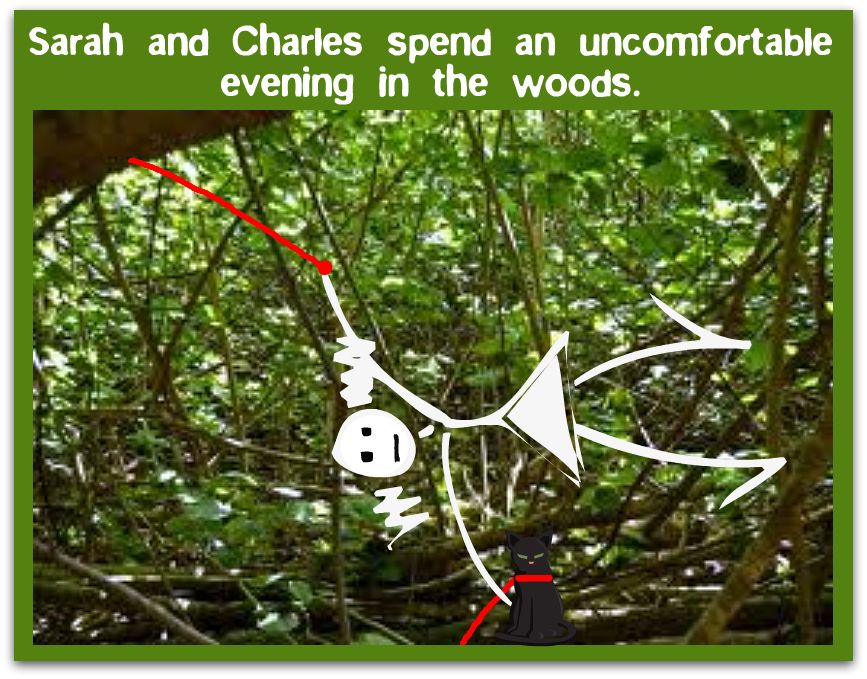
Charles runs off in a thunderstorm. He's missing for 3 days! Sarah goes to look for him and gets trapped in a rabbit snare with him! Lady Wesley calls the Professor who races out to the country to find her. Which he does - after dark. It's too late to find their way out of the woods - so the Professor puts his arm around Sarah and holds her through the night...sounds lovely...but there's still a sticking point. Who is the mysterious Miss Lisse - she who is called darling and talks of wedding plans. No problem - it's his sister! Kissing and proposal in the driveway - in full view of the entire cadre of servants. And then a couple of encores. The End.
Rating: Queen of Puddings with Whipped Cream on top! I truly loved this book. It might even make it into my top ten. I really only have one little quibble - Lisse. After spending two or three weeks in Holland at the family home, then later spending a month with Mevrouw Nauta, surely Sarah would have seen or at least heard of the Professor's sister???? Other than that, I adored Roses Have Thorns. Sarah is a plain little thing - but she's got spunk. Radolf can't believe he's finally fallen for someone - fallen hard. He spends much of his time being annoyed or enraged by her and trying to devise ways to improve her lot - it takes him a while to catch on to the fact that he's in love. Sarah can take his irritability, she's constantly reminding him to watch his language. The fact that she cheerfully accepts a job as a housemaid and makes that work for her, just makes me like her all the more. I find her fellow servants charming...the fact that they peg her as someone who is working 'below her station', and the final scene with them all peeking out the window while Radolf obliges them by kissing Sarah again...priceless.
Food: Sausage roll, steak and kidney pie with rice pudding for afters (in the servants hall), petit pois, creamed spinach and carrot sticks, new potatoes, canapes, pasties, iced melon, jellied chicken, strawberries and fromage blanc.
Fashion: brown pleated skirt, neat little jacket and a couple of drip dry blouses. Dove grey jersey, various housemaid's uniforms including the black with white apron used for serving meals, rose patterned cotton jersey(possibly inspiration for cover art?), another girl wears an indecent red dress to the London dinner party at Lady Wesley's - Sarah could see clear down the front when she was serving.

Thursday, October 28, 2010

When Two Paths Meet - 1988

I thought I remembered this book quite well. I did have most of the plot down pat - but I didn't remember loving this one. Why didn't I love it? The question bothered me until about 2/3 of the way through...then I knew. It's a 600 pound gorilla.

In the pre-dawn chill a knock sounds at the door...Katherine Marsh hops out of bed and tiptoes downstairs so as not to wake the household. A good-looking stranger urgently requests entry, as he has just found a newborn baby beside the road. Man with baby? Check. Dawning Realization? Check. Dr. Fitzroy asks that Katherine accompany him to the hospital so that she can hold the baby...Katherine is happy to help out (although sister-in-law Joyce is NOT), even happier that instead of being forgotten at the hospital as she expected, Dr. Fitzroy has arranged for her to have breakfast in the canteen. When he takes her home she shakes his hand goodbye and 'looked up into his face learning it by heart...memory was all she would have.'

Katherine lives with older brother Henry and his wife Joyce. They are a delightful couple. Psych! Not really. Henry is a schoolmaster...which hardly bodes well for the youngsters in his care. I find myself wondering what kind of school he teaches at...and can only imagine some horrible Dickensian boarding school and Henry a close runner-up to Wackford Squeers. Alas, the only thing we really know about Henry is that he is pompous, selfish, self-absorbed, doesn't care for his own children...which is where the redoubtable Mr. Squeers has him beat. Mr. Squeers at least likes his kids. Joyce is very busy with her own social life to have any time for her kids either. If ever there was a couple who shouldn't have had kids, it's these two.
Dr. Fitzroy shows up with a job offer! Poor Joyce and Henry aren't given any choice in the matter...no two weeks notice to find a new slave. Katherine is going to be trading her job of taking care of two ill-behaved children for a job taking care of a peppery old man and his wife. The new jobs pays 40 pounds a week, which is more money than Katherine has had in her pocket in maybe forever. One of the perks of the job is that Dr. Fitzroy drops by a couple of times a week to check up on Mr. Graingers dickey heart. A job that actually pays AND the chance to see her true love twice a week? You betcha. Henry turns puce when he finds out that she's taking the job...'You ungrateful sister! I've given you a home and food and clothes...' 'And look what you've gotten in return - unpaid housework, a nanny and you haven't even given me an allowance.' Good for her. I really like Katherine when she's in this mode...not so much when she wastes sympathy on Henry and Joyce (but no sympathy on the children...who deserve it more).
The Graingers are nice to work for - there's just one fly in the ointment. Granddaughter Dodie. The 600 pound gorilla. Dodie spends the book being rude, caustic, thoughtless, selfish, etc. She is, in a way, refreshingly forthright - she's not two-faced at all. The reason I don't care for her plot line is the inexplicableness of La Neels having Dr. Fitzroy spend soooo much time with The Dread Dodie. He also suggests to Katherine that The Dread Dodie could give her fashion advice. Umm. No thanks. Dr. Fitzroy is startled to see a look of such rage that he blinks. No way girlfriend is going to take fashion advice from the enemy...because that's just what The Dread Dodie is - the enemy. Both girls know it instinctively.
Dodie conspires with a relative to shift the Graingers to Cheltenham for a spell. Even though Mr. and Mrs. Grainger like Katherine a lot, they sashay off to Dodieland with nary a backward glance. This means that Katherine is out of a job. Dr. Fitzroy steps into the breach and gets her another job...nurses aide at the hospital. Yay! Bedbathing old men and emptying bedpans. She does make more money...enough to rent a room from Mrs. Potts. Her independence is growing by leaps and bounds...and now that she's working at the hospital, there's a chance every day to see Dr. Fitzroy. The best thing about the job change (besides seeing Dr. Fitzroy more often), is that Katherine finally gets to make friends with girls her own age - Miranda 'call me Andy', another nurses aide, and a girl at Mrs. Potts.

Dr. Fitzroy's younger cousin, Edward comes for a visit. He would be an ideal brother, says Katherine - over and over and over again. Seriously...Katherine loses no opportunity to let the good doctor know that she has no romantic feeling for the guy. Especially after Edward asks her out and Dr. Fitzroy goes strangely avuncular. Lots of fun to be had with Edward and Jason (yes, Jason). Hot cocoa around the fire after the midnight Christmas service, invitation to a New Year's Eve party at Jason's, teaching Katherine how to play poker and a day out walking through the snow at Stourhead, where once again Katherine tells Jason how sisterly she feels toward Edward. Maybe that's what tips the scales for Jason, but at any rate, he takes advantage of Edward's brief absence to propose. Yup. Right out of the blue. Since everyone has told Katherine that he's supposed to be marrying Dodie, she turns him down. And then kicks herself for it. The Dread Dodie would be an awful wife for Jason. Too bad Katherine blew her one and only chance. Did I say one and only chance? Jason is delightfully persistent - he brings up the subject of proposing with great regularity. If only he would stop going out with Dodie - which he does with great regularity. Oh, and if he would preface his proposal with an 'I love you', that would also help out a great deal.
Henry tracks down Katherine and persuades the Matron that Katherine is needed back at Casa Marsh to care for his ailing wife. Let's all join with Henry in shedding a few crocodile tears. Of course Joyce isn't sick, and Katherine is sure of it - especially when Henry smirks at her behind Matron's back...so she leaves a message with Andy for 'anyone who asks' about her whereabouts. Who's going to ask? Jason sees her entering a car and tracks down Andy to see what's what. What's up is that Joyce has gone out for drinks at the pub and left Katherine with her offspring. Jason shows up after dinner and Katherine falls weeping on his lapels.
Her: Jason, oh Jason! Take me away!
Him: Sorry I couldn't come sooner, I had outpatient's.
He makes amends by taking her back to his place for a much needed dinner. Some cards are laid on the table...hers. He knows she loves him, and gets her to admit it...before proposing again. Her walls are crumbling, she's just about to tell him 'yes' the next day when she hears that The Dread Dodie is engaged to someone else!! Instead of being thrilled, she's now sure that it's a rebound proposal. Katherine refuses one last time...muddied waters are cleaned up...I've loved you since I first saw you in that old dressing gown. I've loved you since you told them to give me a good breakfast. Kiss kiss. The End.

Rating: There's loads to love about this book...unfortunately, there's a 600 pound gorilla named Dodie in the room. Dodie is remarkably straightforward in her hatred of Katherine - and I don't have a problem with that, it's the fact that Jason keeps going out with her and sort of throwing her in Katherine's face. Drives me crazy. Queen of Puddings...unfortunately garnished with a tin of Dodie soup.
Fashion: a wardrobe bought one item at a time each payday. Week 1 - undies. Week 2 - suitable grey dress. Week 3 - a raincoat bought at Woolworth's. Week 4 - A warm and pretty dressing gown and cozy slippers. Week 5 - Winter coat in an unassuming peat brown cloth. New Year's Eve party dress - grey taffeta with a square neck and elbow length sleeve that make her look like a nun at the circus.
Food: Hospital canteen Breakfast O' Love of cornflakes, eggs and bacon, toast, butter and marmalade. Minute steaks, trifle, cheese souffle, egg custard, prawn cocktails, steak and kidney pudding, apple tart AND apple pie, boiled beef and dumplings, boiled ham and parsley sauce (?).

Monday, September 27, 2010

Ring in a Teacup--1978

Two points: A) The cover doesn't match the book hardly at all. Our Lucy has really, really green eyes--not so our cover girl--and long hair. Still, don't you just love it to pieces? B) Upon her marriage, our heroine would take the name of Lucilla Linssen. I vote no.

Lucilla "Lucy" Prendergast, 23, is swimming upstream. She has four distressingly gorgeous siblings, pleasing (though not pretty) features, and blazing emerald eyes which she has just managed to prop open when the cold and disapproving stare of a hospital guest lecturer greets her. It serves him right for making the Night Duty Student Nurses attend a speech about...(rifles through notes, checks spelling)...I don't care already. A feeling I am sure is echoed in poor Lucy's modest bosom.
For his part, Fraam der Linssen, nudging forty and possessing 'the kind of good looks so often written about an so seldom seen', has strode into the lecture hall, appraised the audience and prepared himself to hold forth on a topic near and dear to his heart when he spots that most insignificant of hospital denizens (possibly ranking even lower than a good ward maid with rheumatism and a smoking habit)--a student nurse--nodding off in the center of the front row. How dare she? Wickedly, he directs a question at her...
I didn't hear what you were saying, sir--I was asleep.
To hear him tell it later, he had the most difficult time not whisking her out of her seat then and there and marrying her out of hand.
She has to apologize, naturally.
They next meet at the scene of an accident. She saves the life of a little blighter...uh, boy...who has run into traffic. Fraam (which name is difficult to murmur endearingly, I imagine) scoops her up and (after she drops off to sleep in the Casualty area) 'examines' her--finding only bruises and scrapes. If there were a sliding scale of things you don't want handsome men to see/do around you, where holding your hair while you vomit canal water onto a grassy verge is a 10 and catching you in a minor fib is a 1, then I'd rate this a solid 7.
Although it doesn't seem like he likes her very much, she thinks about him from time to time and wishes she'd been engineered better.
They meet again in Holland.
What?!
An old friend of her father, Doctor de Groot, wants her to stay with him and his only child Mies for a holiday.
(whistle, whistle, blatant plot device, whistle, whistle)
Don't you like each other? says a confused and beautiful Mies when they meet up with Fraam (an old family friend of Mies' too).
That remains to be seen. (Oh Fraam. You're at your best when you're as enigmatic as a Russian arms dealer.)
Lucy also meets Willem de Vries who I thought was destined to be a colorless, slope-shouldered suitor until I found out he had money. Then, naturally, he was better suited to be a young lovelorn fellow meant for Mies.
While Fraam moonlights as a one man chauffeur service by offering numerous women of a variety of hair hues rides in his swanky Panther de Ville, Lucy plots to bring Mies and Willem together. Maybe, she suggests, Willem could pretend to be interested in her. Waters are slightly muddied.
At the Dutch hospital ball, Lucy arrives in a horribly modest emerald number that Fraam just loves. If he could waltz her into a corner...Alas, she had told everyone that she wasn't dancing in a bid to not have Mies scrounge a date for her. Willem doesn't take no for an answer, however, and leads her onto the nearly empty dance floor...where she shakes her moneymaker in a jaw-dropping fashion. She's clearly the best dancer there.
Fraam plucks her out of a clutch of young people and claims a dance. But then he's a little insulting about it. I shall be sadly out of fashion if I can't say that I have danced at least once with you. Notice, he didn't risk asking her to dance (she might turn him down) and then he excuses his behavior as duty. Fraam is being very weenie. Forgive him though. He loves her very much and already thinks she thinks he's too old for her. He puts things to right by finding a quiet balcony and praising her dancing and her dress and laughing a little at the precarious fashions being held up by sticky tape and prayer out there on the dance floor. Detente.
The rest of Holland comprises a rescued kitten, Willem doing the psychological equivalent of taking Mies across his knee and walloping her, Fraam telling Lucy that he does his utmost not to see her and then a whopping kiss.
Sailing home with an upgraded stateroom and a massive bunch of flowers, Lucy is unaware of the palm greasing Fraam engaged in to make it so.
Fraam comes to England to give another lecture and this time Lucy takes care to sit well in the back to avoid him noticing her. Skipping down an unused corridor afterward, she is nevertheless irritated that he gives her nothing more than a frosty nod in passing. It bugs her all day and she decides to skip socializing and go to bed.
But she's pulled away by a message. There's a man down there in the waiting room. A real live man. For Lucy.
It's Fraam. Looking about him at the unwelcome surroundings he comments, 'I wonder how many young men survive a visit here? She answered him seriously. 'Well, if they're really keen, it doesn't seem to matter,' she told him, and wondered why he smiled.
And then he has time to be either a weenie again or a strategist. Mies made me promise to take you out for a meal while I was over here. Will you come now?
(Oh Fraam! You'll never defeat the Nazis if you don't charge out of the foxhole!)
At the end of a very nice night he catches her close. 'I almost forgot,' his hand came up and lifted her chin gently: 'I had to give you this from Mies.' She had never been kissed like that before.
(Chaaaaaaaarrrrrge!)
They next meet during a blizzard in her home village. Fraam just happened to be in the area...He goes out in the teeth of the storm to assist her in the at-home delivery she's had the misfortune to get roped into. Oopsie. The baby's breech. Double oopsie. The baby is twins. In a blizzard. Way out in the country.
This is one of those moments that underscores my deep and heartfelt affection for the easy charms of suburbia...
But I digress. Lucy is so glad to see Fraam. She is just a student nurse after all and another pair of hands is more than welcome. Attach those hands to the body of a hot, hot RDD and then I think we've got the makings of a triple word score.
Fraam cooks and holds the babies and shovels snow. Lucy collects the eggs and milks the goat and makes hot mash for the chickens. They wait for the sound of a helicopter or snow-plow to rescue them. It's like Little House on the Prairie meets the Rebel Alliance on the ice-planet Hoth.
And when they finally do make it back to her parent's house Lucy nods off from exhaustion. Fraam scoops her up and carries her to bed. Mrs. Prendergast tucked her in. 'The darling's absolutely out cold.' 'The darling's absolutely darling,' remarked Mr. der Linssen at his most suave. Putting aside the fact that I think 'suave' is a perfectly horrid word choice at a time like that, we've got some very telling signs.
When Lucy is shoveling snow with Fraam the next morning her dawning realization hits her over the head with a snow shovel. Eureka! I love him! What now?
Fraam asks Lucy to come to Holland to nurse Doctor de Groot who happens to need surgery for the very complaint that Fraam lectured on (and Lucy slept through). No matter. He'll fill her in.
She arrives after a long and weary day of travel dressed in the most utilitarian clothes possible when he stops at his house and invites her in to meet his family. If he'd tried that with me I'd feel legally bound to tell him that for his own safety and for the safety of others he'd better get used to wearing protective shin guards. But Lucy doesn't kick him under the table. They have a lovely dinner and she thinks how lucky some girl would be to get those in-laws.
When Lucy finally (after some very light nursing) gets another free day Fraam kisses her gently and then bundles her into a car. (THE Panther de Ville?) I'm going to marry you. You can think about it on the way to the house.
Now before we get all judge-y about his delivery I'd like to make a couple of points:
  • Sure those three little words weren't said ("Account at Harrods.') but he has been kissing her pretty steadily. Oughtn't she to have known?
  • As soon as he read her brainwaves and angry Japanese snowmen as a token of her undying love for him, he proposed just as soon as he could. He's been waiting to ask her for months and it's as though he's a contractor who didn't let his foundation properly cure before slapping a house on top of it. The cracks from all that unseemly haste will soon begin to show.
She accepts and very sweetly tells him she loves him (which is his cue for...?) but wants to work out her notice at the hospital--so that he can be extra sure. Mies, who heretofore had been kind of a dim-witted and fairly kind parallel character, at this point gets under my skin.
Wow. You're, like, totally engaged. You are so not his type. He's liked a ton of other girls before. Let's sit down and make a list of them. No, no, we're going to need the thick pad of paper... Alright, now first the blonds...
Mies mentions a name Lucy hadn't heard before--Adilia. (Pity that I have not the time to find a font with daggers and dripping blood because Adilia looks a little innocuous in the default blogger font.)
To her credit, Lucy asks him about it and though he is cold (Framm-speak for uncertain and worried) he answers her well enough. He even invites Adilia to lunch and tells Lucy 'Now you know what she's like' which settles it as far as he's concerned.
And then Aunt Sophie gets to Lucy at a family function. (Marvelous that you young things know how to look the other way when your husbands play the field...) Fraam manages to say that he loves Lucy (to his aunt! which is nearly unforgivable as Lucy hasn't heard the words herself yet) so feathers are smoothed.
And then Lucy sees Fraam driving Adilia in his Panther de Ville (What is he a taxi service?!) at a time when he is supposed to be 'at work'. They begin to have a tearing row but Fraam doesn't waste time being icy and aloof. 'Now, now, my love,' he said soothingly, 'what is all this?' He kissed the top of her head. 'I believe Tante Sophie's hints and spite did their work, after all.' And then he explains. The reader begins to wonder if this will be the whole of their married life--jealous rages and solicitation all the way into the grave.
So she is calmed again.
And then he says he has to go to Brussels which got my Disaster-o-meter ringing bells like crazy. Shall we recite, class, the First Commandment of Betty:
Danger lies in Belgium.
There, be pirates and death rays and all manner of villainy.

(I'm going to get a cease and desist letter from the Belgium Chamber of Commerce--you see if I don't.)
Lucy is in the front parlor of Fraam's (they're living together, didn't I say? Properly chaperoned!) when Adilia (imaging the gore and daggers) walks in. I have come to suck your blood!
No, she does something worse than suck the life out of her dooming her to an eternity of pallid skin and a monotonous diet. She uses little truths to make a gigantic lie. Fraam is in London! I vill soon be there! Ah, Ah, Ah! Let's ask Fraam's faithful butler vere he is. London! Ah, ah, ah! You can have his ugly babies and I vill have his heart!
Lucy, having the grottiest day ever, keeps it together until Adilia leaves and then, flinging her ring into a teacup, dashes upstairs for her coat and gloves. All she knows for sure is that Fraam said he was going to Brussels when he actually went to London.
She walks all day and checks into a nice hotel when she can't walk any more. But she doesn't have her purse/money/passport. Blast. And when she tries to explain to the check-in clerk that she's Doctor Linssen's fiancee and that she doesn't have it, the glorified pencil pusher's eyes dart to her ringless hand.
They ask her to wait in her room...and then lock her in. Before she has a chance to fashion a make-shift rope out of bedsheets or stage a prison riot (No justice, no peace!), Fraam walks in. His rage (which I sympathize with) evaporates when she explains. Tears and kisses. He went to London to get her released from having to work out her remaining time at the hospital so they could get married sooner. Brussels was a head-fake. (Whew.)
He'll give her a week to get her wedding dress and in the mean time that ring is to stay put.
The End


Rating: I remember liking this book but I also remember being irritated at the end. Why doesn't she trust him more? Why does she take off so fast? But upon re-reading I noticed some things that helped me like this waaaaay more. 1) Adilia called Lucy's future children plain. This is a super big deal--the bony brat found Lucy's insecurities like Luke Skywalker hunting womp rats and imploded them faster than the Death Star. 2) Though this Betty is not a fan of weekending in Brighton, she is an enormous fan of pre-marital snogging in the vicinity of Southern England. (Keep your hands to yourself!) Much of Fraam's problems would have been evaporated the second he decided to use that William and Mary settee in the front parlor for more than tea-sipping. 3) What guarantee do we have that Lucy's doubts are finally banished? On the final page Lucy flings her arms about Fraam's neck and kisses him. Heretofore, she had been cheerfully accepting his kisses but worried about invading his personal space on her own bat. This all changes when she finally (finally!) realizes that he's been waiting for her as long (longer, actually) as she was waiting for him.
Still, it would have been nice had there been a few fewer Adilia's waiting to shank Lucy when Fraam's back is turned.
No matter. I give it a Queen of Puddings!
Also, there are really wonderful bits with her family and as a nurse on the ward that I didn't cover very thoroughly in the review but which are well worth the read.

Food: Roast beef, fish and chips, currant buns, Sole Picasso (Cubed Sole?), vanilla ice cream, milk pudding, Poussin en Cocotte, carpet-bag steak (This sounds as tough as old boots.), cheese straws, bubble and squeak, and fried bread.
Fashion: She wears a jersey dress and jacket, a tweed skirt that she hates, a full rose-patterned skirt and (to the hospital ball) a green silk jersey gown with a modest neckline that she'd like to take some shears to and slash the bosom of. Tourists make themselves conspicuous with clothes made of 'uncrushable man-made fibers'. Fraam has a trendy waistcoat and a beautifully cut suit with the pant legs stuffed into wellies. Lucy meets her future in-laws in her traveling clothes--a tweed skirt, a shirt blouse (?) and sweater.